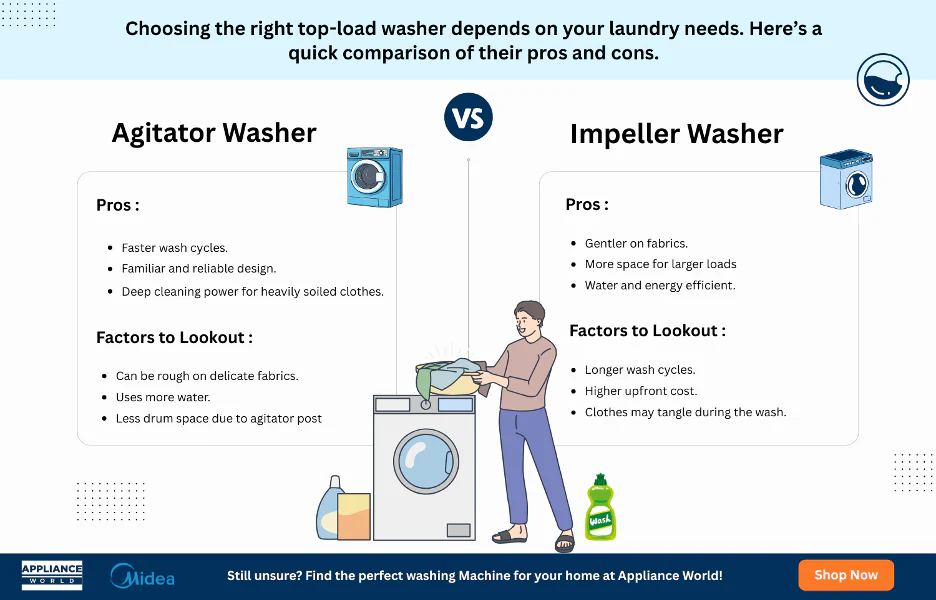
When it comes to choosing a washing machine, one of the most debated topics is whether an agitator actually cleans clothes better than other types of washers. For many, the decision isn’t just about laundry efficiency—it’s about time, energy, fabric care, and ultimately, the satisfaction of getting clothes truly clean. If you’ve ever stood in the appliance aisle wondering whether that spinning central post is a friend or foe, you’re not alone.
What Is an Agitator?
An agitator is the central post found in traditional top-loading washing machines. It usually has fins or vanes and moves back and forth during the wash cycle, physically moving clothes through water and detergent. This motion is intended to scrub fabrics, loosen dirt, and help detergent penetrate fibers more effectively.
In contrast, impeller washers, commonly found in high-efficiency top-load machines, use a low-profile rotating disc or plate to create a water current that moves clothes around. The goal is similar—cleaning—but without the aggressive scrubbing action.
How an Agitator Works
The agitation process is deceptively simple but surprisingly effective. Picture this: the central post twists one way, then the other, pulling clothing through the water and detergent. This mechanical movement breaks down soil, grease, and grime. The constant motion ensures that each garment gets a thorough scrubbing, which is why many people swear by agitator machines for heavily soiled laundry, such as work uniforms or muddy sports gear.
I remember when I first switched to an agitator washer after years of using an impeller model. My kid’s soccer jerseys, which previously retained stubborn grass stains, were coming out noticeably cleaner—even without soaking or pre-treating.
Agitator vs. Impeller: Which Cleans Better?
The question often boils down to what kind of laundry you do most. Here’s a simple comparison table that captures the key differences:
| Feature | Agitator Washer | Impeller (High-Efficiency) Washer |
|---|---|---|
| Cleaning Power | Strong scrubbing action for tough stains | Gentle, relies on water movement and detergent |
| Water Usage | Higher water consumption | Lower water usage (eco-friendly) |
| Cycle Time | Typically shorter | Often longer |
| Fabric Care | Can be rough on delicate fabrics | Gentle, preserves clothing longevity |
| Energy Efficiency | Moderate | High (less electricity per load) |
| Load Capacity | Moderate | Usually larger |
From the table, it’s clear: if your priority is tackling heavy stains and you don’t mind slightly higher water use, an agitator washer tends to clean better. However, for delicate fabrics or eco-conscious households, the impeller might be more suitable.
Everyday Laundry Challenges and Washer Performance
Imagine a family with two young children, an active dog, and a garden. Weekends are full of muddy shoes, grass-stained pants, and pet bedding that needs frequent washing. In this situation, an agitator washer shines. Its vigorous scrubbing action ensures that dirt is lifted effectively, saving parents from multiple rinse cycles or pre-soaking efforts. On the other hand, a household with mostly office clothes or delicate fabrics might find the gentler motion of an impeller sufficient, preventing wear and tear on softer materials.
Factors Affecting Cleaning Performance
It’s worth noting that the agitator itself isn’t the only factor in laundry performance. The following elements also play a significant role:
-
Detergent Type and Quantity – High-efficiency washers need low-sudsing detergent, while agitator machines can handle standard formulas.
-
Water Temperature – Hot water helps dissolve detergent and lift stains more effectively, but it can shrink or damage some fabrics.
-
Load Size – Overloading any washer reduces cleaning efficiency. Clothes need room to move.
-
Cycle Selection – Heavy-duty or deep-clean cycles enhance agitation for tough stains.
My Personal Experience
In my home, switching between an agitator washer and an impeller model revealed subtle differences I hadn’t expected. While both machines cleaned everyday clothing well, the agitator consistently removed stubborn coffee spills and dirt from denim without additional effort. Meanwhile, the impeller was quieter and more water-efficient, making it ideal for light, delicate loads.
Unique Value of Agitator Washers
Despite the rise of high-efficiency models, agitator washers offer a unique combination of reliability and cleaning power that still appeals to many households. Their robust mechanical motion is especially beneficial when cleaning items with embedded dirt, heavy fabrics, or outdoor gear. Plus, these machines tend to be simpler in design, which often means easier maintenance and repairs over time—a value that is sometimes overlooked when comparing models.
Tips for Optimizing Agitator Performance
Even if you own a traditional agitator washer, you can enhance its cleaning effectiveness:
-
Separate heavy and delicate loads – Mix similar fabrics to prevent wear.
-
Use the right detergent – Don’t overuse; it can leave residue.
-
Avoid overloading – Give clothes room to move freely.
-
Pre-treat tough stains – While agitators are strong, stubborn spots benefit from targeted treatment.
Read More: OnPressCapital: Strategic Growth & Funding Partner
Conclusion
So, does an agitator clean better? The answer largely depends on the type of laundry you handle and your priorities. For households with heavily soiled garments or outdoor gear, the mechanical scrubbing of an agitator can outperform gentler, high-efficiency alternatives. On the other hand, if your focus is water conservation, energy efficiency, and fabric longevity, a modern impeller washer might suit you better. Ultimately, knowing your laundry habits and choosing the right washer ensures clean clothes, happy fabrics, and fewer repeated cycles—a win for both your schedule and your utility bills.
FAQs
1. Are agitator washers better for large loads?
Agitators work well for moderately sized loads. Overloading can reduce effectiveness, so it’s best to follow the manufacturer’s recommendations.
2. Do agitator washers damage clothes?
They can be rough on delicate fabrics due to the vigorous scrubbing. Using gentle cycles or separating delicate items helps minimize wear.
3. Why do some people prefer impeller washers?
Impeller washers use less water, are gentler on fabrics, and are more energy-efficient, making them ideal for everyday laundry without heavy stains.
4. Can agitator washers handle all types of stains?
Agitators excel at lifting stubborn, ground-in dirt, but extremely delicate fabrics may still require pre-treatment or specialized cycles.
5. Are agitator washers more expensive to run?
They generally use more water and sometimes slightly more energy, but this is balanced by their superior cleaning performance for tough laundry.