You’ll find the right mechanic school by first verifying it has NATEF accreditation and prepares you for ASE certification. Compare programs to guarantee at least 60% hands-on shop time versus classroom instruction. Calculate total costs including the $3,000-$5,000 you’ll need for tools beyond tuition. Tour facilities to inspect training equipment, diagnostic tools, and vehicle inventory firsthand. Ultimately, request specific job placement rates and check for employer partnerships with dealerships and repair shops. The sections below break down exactly what to look for at each step.
Verify Mechanic School Accreditation and ASE Certification
Before you sign up for any program, verify the mechanic school holds proper accreditation from recognized organizations like the National Automotive Technicians Education Foundation (NATEF). Accreditation guarantees the curriculum meets industry standards and employers will respect your credentials.
You’ll also want to confirm if the school prepares students for Automotive Service Excellence (ASE) certification exams. ASE certification is the gold standard in the automotive industry and substantially improves your job prospects. Schools aligned with ASE standards provide training that matches real-world requirements.
Check the school’s website or contact admissions directly to confirm their accreditation status and ASE preparation programs.
Compare Hands-On Shop Hours to Classroom Instruction
While classroom theory builds essential knowledge, you’ll master automotive repair only through extensive hands-on practice. Look for programs offering at least 60% shop time versus classroom instruction.
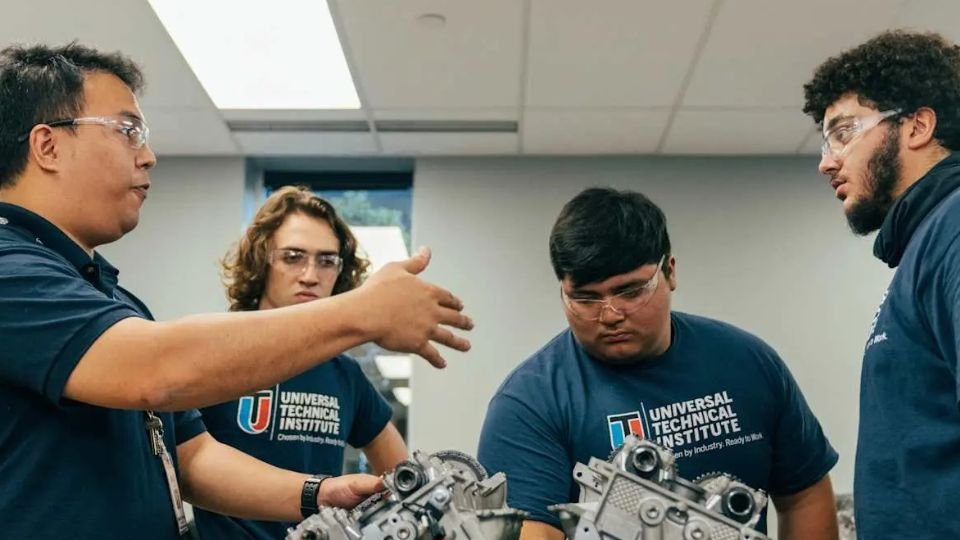
Quality schools provide well-equipped labs with modern diagnostic tools, engines, and vehicles for real-world experience.
Ask admissions representatives about student-to-instructor ratios during shop sessions. Smaller groups guarantee you’ll receive personalized guidance and adequate access to equipment.
Request a facility tour to observe shop conditions and available resources.
Programs emphasizing practical training better prepare you for actual repair scenarios. You’ll develop critical problem-solving skills and muscle memory that textbooks alone can’t provide.
Calculate the True Cost Beyond Tuition and Fees
Though tuition represents the most visible expense, mechanic school requires substantial additional investments that many students overlook. You’ll need to budget for specialized tools, which can cost $3,000-$5,000 initially.
Factor in textbooks, safety equipment, and work uniforms. Transportation expenses matter too—if you’re commuting daily, calculate fuel costs carefully. Consider housing if you’re relocating, plus living expenses during your training period when working full-time becomes difficult.
Some programs require specific certifications before graduation, adding extra fees. Request a complete cost breakdown from each school, including all mandatory purchases and hidden charges, before making your final decision.
Inspect Training Equipment and Tool Access Firsthand
Since hands-on learning drives mechanic training success, you can’t afford to choose a school with outdated or insufficient equipment. Schedule campus tours to inspect the training bays, diagnostic tools, and vehicle inventory personally. Check whether students work on modern vehicles reflecting current industry standards or older models with obsolete technology.
Ask about tool-to-student ratios and whether you’ll need to purchase your own equipment. Observe active classes to gauge how much actual hands-on time students receive versus lecture hours. Quality programs provide individual workstations with professional-grade tools, letting you build real-world skills before graduation. Don’t skip this essential evaluation step.
Check Job Placement Rates and Employer Partnerships
Quality training equipment means little if your chosen school can’t connect you with actual employers after graduation. Request specific job placement statistics from the past three years, not vague success stories.
Strong programs maintain partnerships with dealerships, repair shops, and automotive companies that actively recruit their graduates. Ask administrators which employers visit campus for recruiting events and whether students receive interview opportunities before completing their programs. You’ll want schools offering internship placements during training.
Contact recent graduates directly through LinkedIn to verify the school’s placement claims. High employment rates within six months of graduation indicate valuable industry connections that’ll benefit your career launch.
Frequently Asked Questions
Can I Transfer Credits From Mechanic School to a Four-Year College Later?
You can potentially transfer credits, but it depends on your mechanic school’s accreditation and the four-year college’s policies.
You’ll need to contact the college’s admissions office to determine which credits they’ll accept toward your degree.
Do Mechanic Schools Offer Evening or Weekend Classes for Working Students?
Yes, many mechanic schools offer evening and weekend classes to accommodate working students. You’ll find flexible scheduling options that let you balance your job with training.
Check with individual schools about their specific class times and formats.
What Is the Typical Student-To-Instructor Ratio in Mechanic School Programs?
You’ll typically find student-to-instructor ratios ranging from 15:1 to 25:1 in mechanic school programs.
However, hands-on lab sessions often have smaller ratios, around 8:1 to 12:1, ensuring you’ll receive adequate personalized attention.
Are There Scholarships Specifically Available for Automotive Technology Students?
Yes, you’ll find scholarships specifically for automotive technology students through organizations like ASE Education Foundation, automotive manufacturers, trade associations, and local dealerships.
You can also check your school’s financial aid office for program-specific funding opportunities.
How Long Does It Take to Complete a Mechanic School Program?
You’ll typically complete a mechanic school program in six months to two years, depending on whether you’re pursuing a certificate or associate degree.
Part-time programs naturally take longer than full-time enrollment options.
Conclusion
You’ve now got the tools to evaluate mechanic schools like a pro. Don’t rush your decision—visit campuses, ask tough questions about costs and job placement, and check those accreditation credentials. Your future career depends on choosing a program that’ll give you real-world skills and industry connections. Take your time, do your homework, and you’ll find the right school that fits your goals and budget.