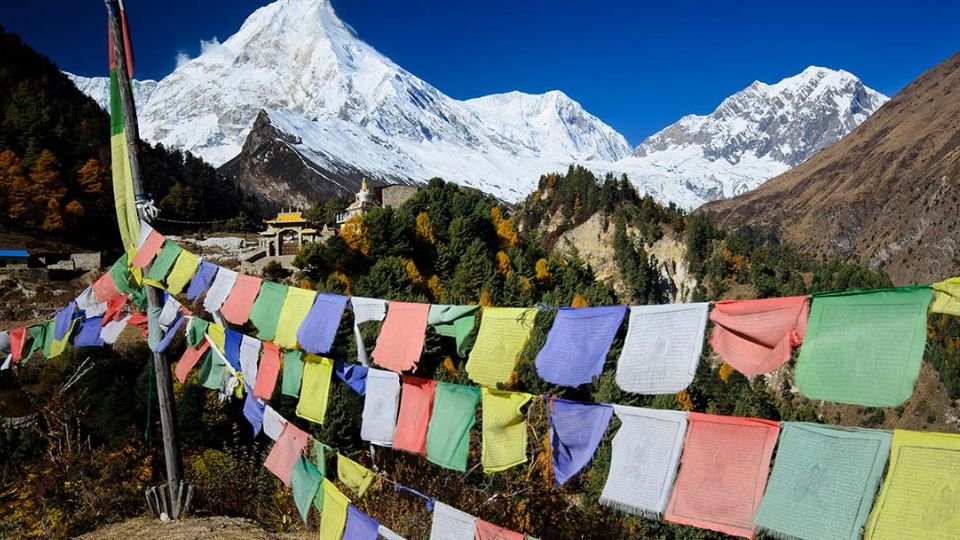
The Manaslu trek is more than just a Himalayan trekking trip, taking trekkers to the base of Mount Manaslu (8,163 meters), the eighth-highest mountain in the world. It is placed in the Gorkha District of Nepal in the northern Himalayan range.
Most of the area remains under the Manaslu Conservation Area, protected by the National Trust for Nature Conservation (NTNC) of Nepal. This helps manage sustainability and conserve the natural resources of the region, along with the preservation of cultural heritage.
Additionally, the NTNC promotes ecotourism to improve the livelihoods of local people in the Manaslu Conservation Area.
The region is highly popular for trekking, rewarding visitors with mesmerizing views of the snowcapped mountains. The region is known for its diverse tradition and culture, allowing trekkers to have close interaction with different local ethnic groups.
Moreover, trekkers encounter ancient monasteries, sacred mani walls, Buddhist chortens, and friendly villagers who still follow their ancestral traditions and believe in living in harmony.
The trail circles the Manaslu region, from subtropical Himalayan foothills, traversing the high Larkya La pass to barren Tran-Himalayan ranges bordering Tibet. Once, the ancient trade route that connected Nepal with Tibet was famous.
Both Hindu and Tibetan Buddhist cultures coexist, preserve, and expand side by side in the Manaslu region, making it one of the few places in Nepal that provides a deep insight into the cultural diversity of the Himalayas.
Here’s a comprehensive and well-researched cultural highlight of the Manaslu Circuit Trek, providing an easy-to-follow travel guide to cultural exploration within the region —informative for every type of traveler.
Tibetan-Influenced Villages
As trekkers begin the Manaslu Circuit Trek, the path passes through different communities and villages scattered throughout the region. The journey of cultural immersion begins when you reach Tibetan-influenced villages in the higher regions.
Beyond the Namrung villages, trekkers step into Tibetan Buddhist-influenced villages such as Lho, Sama Gaon, and Samdo. The people who live there are called Nubri people, descendants from Tibetan settlers who migrated centuries ago.
The houses in the villages are built of stone, with prayer flags fluttering on the rooftops in the wind. Intricately carved mani stones and chortens covering the lanes of the villages reflect a life led by spirituality.
The people of these villages have a high impact of Tibet not only in attire and languages but also in their culture, faith, and hospitality. The villages make you feel like you’re exploring a living museum of Tibetan Himalayan culture.
Ancient Monasteries and Gompas
The Manaslu region can be a spiritual journey, as the region features many ancient monasteries and Gompas, which mostly serve as the religious center of local communities to perform spiritual rituals.
Many monasteries along the Manaslu Circuit trek include Ribung Gompa, Pungyen Gompa, Sama Gompa, Kargyu Chholing Monastery, Rachen Gompa, Serang or Nubri Monastery, and others.
Each monastery and gompa has its own values and significance, reflecting the Tibetan Buddhist believe. Ribung Gompa near Lho provides mesmerizing vistas of Mt. Manaslu. As the trekkers pass through this Gompa, they can listen to young monks reciting Buddhist scriptures.
Similarly, Pungyen Gompa is one of the ancient monasteries in the Mansalu region, which is perched at the base of Manaslu Himal near Sama Gaon. This place is perfect for a meditation retreat and for observing monastic life in a serene environment.
Moreover, Sama Gompa and Kargyu Chholing Monastery carry the fundamental teachings of Tibetan Buddhism. Visitors can also witness or participate in some ancient ritual ceremonies, such as morning prayers and butter-lamp offerings.
In this way, the Manaslu region is one of the spiritual hubs, where trekkers can explore centuries-old monasteries and Gompas along each trekking route. The region and its local people have been able to preserve their historic sites and cultures until now.
Buddhist Rituals and Festivals
Locals celebrate vibrant Buddhist festivals throughout the year that fill the mountains with music, dance, and devotion. Some of the important festivals are Tiji, Tibetan New Year-Lhosar, the local Yak herding festival, Saka Dawa, Mani Rimdu, Chyanba Festival, and more.
Among all these festivals, the Manu Rimdu festival is the most prominent one, performed with huge rituals and practices such as dancing and chanting. The practices symbolize the victory of good over evil.
The monks perform the rituals alongside villagers, all gathering in the monasteries’ courtyards. They chant sacred mantras while spinning the prayer wheels and offer butter lamps and burn incense.
These rituals are performed at almost every Buddhist festival, uniting the community and aiding in the preservation of century-old traditions. This provides great opportunities for trekkers to experience the spiritual vibe that beats beneath the unspoiled beauty of nature.
Traditional Lifestyle and Hospitality
The way of living is simple in the Manaslu region, with a profound connection with tradition and nature. Most of the people here are into farming; mainly harvest potatoes, millets, buckwheat, and barley in terraced fields.
Besides, they are also involved in animal husbandry, raising yaks, goats, and sheep for milk, meat, wool, and transportation. Some communities near the Tibetan border engage in traditional trading, exchanging grains, wools, and salt through ancient trails.
Since trekking has become popular in these areas recently, ecotourism has become a new source of income. Locals established numerous teahouses along the routes to welcome guests.
Teahouses are mostly made of stone and wood, providing cozy rooms, a warm dining area, and hearty meals. They serve the region’s famous butter tea or a bowl of tsampa (roasted barley flour), which tastes luxurious in such cold surroundings.
Locals are friendly and genuine, allowing trekkers to form real human connections. Their authentic hospitality reflects locals’ Buddhist values of Kindness, respect, and sharing for all beings.
Distinctive Dress and Handicraft
Most of the locals who live particularly in upper Manaslu wear traditional dress, displaying their tradition, practicality, and a vivid expression of their identity.
Many people, especially older generations, still wear the traditional Tibetan-style attire like chubas, a long woolen robe tied with a sash. This dress is often matched with colorful aprons and embellished with turquoise and coral jewelry.
Whereas men wear a warm woolen dress suitable for the cold mountain climate. The garments are well designed to tackle the harsh weather of the mountains and are passed down through generations, symbolizing both beauty and protection.
Dressing in traditional attire not only highlights the region’s significance but also shows respect towards its local culture and traditions.
Moreover, the area is popular for its handwoven carpets, woodcarvings, and yak wool products. These centuries-old handicraft skills represent the artistry and persistence of people living in the remote area of the Himalayas.
Sacred Sites and Spiritual Symbolism
The spiritual beliefs are deeply rooted in the communities along the Manaslu trail, turning every step into a spiritual landmark. Most of them follows or practice the Tibetan Buddhism combined with the ancient shamanistic Bon faith.
Typically, every village consists of sacred monuments such as monasteries and inscribed with gompas, along with towering chortens, colorful prayer flags, and mani walls inscribed with “Om Mani Padme Hum”.
These elements of faith are believed to spread blessings and purify the air for all living beings. Generally, locals begin their day by chanting, spinning prayer wheels, and performing kora (circumambulation) around holy sites like monasteries or gompas.
During your trek to this spiritual landmark, the locals often perform small rituals of offering and pray for your safe journey before crossing the Larke La Pass (5,106m).
The rituals combine spirituality with survival, making you feel special and connected with a powerful culture. Such a small yet meaningful gesture of the local people and being part of their tradition in Manaslu leaves a solid memory on trekkers.
Cultural Transition Zones
The Manaslu Circuit is most popular for its cultural transition throughout the trail. The places offer an immersive cultural experience for trekkers along with a glimpse of the remote lifestyles of Himalayan communities.
Most of the lower parts of the Manaslu region, mainly the Soti Khola to Ghap, Gurung, and Magar communities, are inhabited. They follow Hinduism and religious animism, practicing customs and rituals accordingly.
However, the cultural landscapes transition to Tibetan Buddhism as the trail ascends to higher altitudes. The area consists of many historic monuments, such as monasteries and gompas adorned with prayer flags, mani walls, and intricately carved prayer wheels.
This unique transition highlights the unspoiled tradition and incredible ethnic diversity of Nepal. This allows trekkers to explore the remoteness of Manaslu, along with providing insight on how geography and altitude influence culture and faith.
Local Cuisine and Food Culture
The Manaslu region mostly serves traditional foods in every teahouse and lodge. Local foods are influenced by Nepali, Tibetan, and indigenous cooking styles, highlighting the culture of this region.
During the Manaslu Circuit trek, Trekkers can sample the typical local cuisines such as dal bhat, potato stew, buckwheat pancakes, and yak cheese. These foods reflect both practicality and cultural flavor.
Moreover, thukpa (noodle soup) and momo (dumplings) are the most popular foods, which are filled with Himalayan herbs and warmth. It provides nutrition, maintains your balanced diet, keeps you fuller for the whole day, and builds up energy to walk.
Food in Manaslu has nourishment value, providing trekkers with the joy of tasting authentic local Himalayan foods. Mostly, the meals are simple, served warm and hearty, symbolizing hospitality and community.
Preservation of Heritage and Eco-Spiritual Values
The Manaslu Circuit trek remains under the protection of the Manaslu Conservation Area, aiming to preserve the region’s cultural and ecological heritage. Until this century, the locals have been following the traditional living style despite modernization.
The local people follow the Buddhist beliefs feature respecting all living forms, which align closely with preservation and values.
Similarly, the Manaslu Conservation Area is established to encourage eco-friendly tourism while promoting local culture. This combination of culture and nature becomes one of the main attractions and inspirations for trekkers to complete the entire journey.