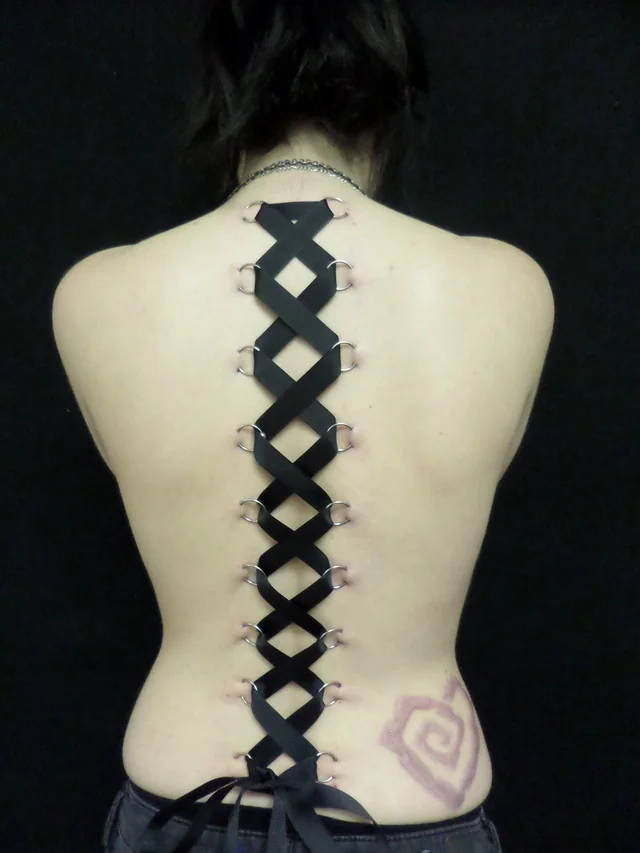
Corset piercings are a striking form of body art that combine aesthetics and individuality in a visually dramatic way. Inspired by the lacing of traditional corsets, this piercing involves multiple surface piercings arranged symmetrically along the back or other areas, then connected with ribbons or decorative chains. The result is a look that’s both bold and sensual, perfect for those who want to make a statement.
If you’re curious, I once tried a small-scale version of a corset-inspired setup on my upper arm, and the artistry of the pattern fascinated everyone who saw it. But like all body modifications, corset piercings demand careful planning, meticulous hygiene, and a realistic understanding of the process.
What Is Corset Piercing?
Unlike a single piercing, a corset piercing is multiple surface piercings arranged in a pattern, typically in two parallel rows. A ribbon, thread, or chain is woven through the piercings, mimicking the laces of a corset. While most commonly done on the back, some experiment on the torso, arms, or even legs.
This type of piercing is considered temporary by most professionals because prolonged wear can increase the risk of rejection and scarring. It’s more of an artistic expression for special occasions rather than a permanent modification.
The Process and Procedure
-
Consultation:
Speak with an experienced piercer to discuss placement, spacing, and jewelry type. Not every body type is suitable for a long corset piercing. -
Marking the Pattern:
The piercer marks symmetrical points on the skin, ensuring proper alignment. Precision is critical for a clean, aesthetic appearance. -
Piercing:
Surface bars or dermal anchors are inserted carefully. Surface bars reduce tension on the skin, lowering rejection risk. -
Lacing:
After healing, ribbons or decorative chains are threaded through the piercings. Materials should be soft and flexible to prevent skin irritation.
Corset Piercing vs. Other Body Piercings
| Feature | Corset Piercing | Standard Surface Piercing | Dermal Piercing |
|---|---|---|---|
| Placement | Multiple symmetrical rows | Single location | Single anchor point |
| Jewelry | Ribbon, chain, bar | Barbell, hoop | Dermal top only |
| Permanence | Often temporary | Can be permanent | Semi-permanent |
| Healing | 4–12 weeks | 6–8 weeks | 2–3 months |
| Risk | Higher rejection | Moderate | Lower if done correctly |
This comparison helps highlight why corset piercings are often celebratory or short-term rather than everyday body modifications.
Care and Maintenance Tips
-
Cleanliness is key: Use sterile saline solution daily to prevent infection.
-
Avoid prolonged wear: Typically, ribbons or lacing should not stay in for more than a few hours or a day.
-
Choose the right jewelry: Flexible surface bars reduce stress on the skin.
-
Monitor skin health: Watch for redness, swelling, or migration; these indicate irritation or rejection.
-
Professional removal: Always have a piercer remove the bars safely to avoid scarring.
Corset Piercing in Real-Life Settings
Imagine attending a themed photoshoot or festival. A corset piercing on the back can be a show-stopping centerpiece. Photographers and enthusiasts are often drawn to its symmetry and the way light interacts with the laces. For one friend of mine, a corset piercing was part of a bridal photoshoot that perfectly complemented the wedding gown—she removed it the next day without complications, capturing a unique and temporary aesthetic.
Risks and Considerations
While visually stunning, corset piercings are high-risk compared to standard piercings:
-
Rejection: Surface piercings are prone to the body pushing them out.
-
Infection: Multiple entry points increase the chance of bacteria entering.
-
Scarring: Even short-term wear can leave marks if the skin reacts.
-
Discomfort: Movement of the back or other pierced area can cause irritation.
It’s crucial to weigh these risks and understand that this piercing is often more for aesthetic experimentation than permanent body modification.
Styling Ideas and Jewelry Options
Corset piercings allow for creativity:
-
Ribbons: Satin, velvet, or leather laces for a traditional look.
-
Chains: Metallic chains for an edgy, alternative style.
-
Beads or charms: Thread beads onto the ribbons for personalized flair.
Choosing the right style can make the piercing feel more like a wearable piece of art than a medical procedure.
Read More: Angel Fangs Piercing: Style, Care & Experience
Conclusion
Corset piercings are an extraordinary way to express creativity, confidence, and individuality. They are temporary by nature, requiring careful planning and professional expertise. Whether for a photoshoot, event, or personal style exploration, they blend artistry and body modification into one striking visual statement. By understanding the process, risks, and maintenance, enthusiasts can enjoy this bold expression safely and stylishly.
FAQs
Q1: Can corset piercings be permanent?
A1: They are usually temporary due to high risk of rejection and scarring. Permanent options are rare and require expert consultation.
Q2: How long does a corset piercing take to heal?
A2: Each individual piercing may take 4–12 weeks, but full aesthetic lacing should only be worn short-term.
Q3: Is it painful?
A3: Pain varies by location and personal tolerance. Surface bars reduce stress, but expect discomfort during insertion.
Q4: Can I do this at home?
A4: Absolutely not. Multiple surface piercings carry high infection risk and must be done by a professional.
Q5: How should I care for it?
A5: Clean with sterile saline, avoid tight clothing, and remove lacing promptly. Monitor for redness or swelling.