The prevailing metric in generative media has, for too long, been raw generation speed. We measure how many seconds it takes for a model to interpret a prompt and return a grid of four images. We celebrate when a new model like Nano Banana Pro reduces that latency further. However, for content teams operating in production environments, raw generation speed is a vanity metric. The real bottleneck isn’t the first 90% of the image; it is the final 10%—the “last mile” where a creative director spots a stray pixel, an anatomical inconsistency, or a lighting mismatch that breaks the brand’s visual language.
In a traditional linear pipeline, this is where the workflow breaks. A creator generates an asset, exports it, imports it into a legacy editing suite, and spends twenty minutes manually fixing a flaw that the AI could have corrected in seconds if the tools were integrated. This friction creates a “generative debt” where the time saved by AI is immediately spent in post-production. To truly accelerate delivery, we have to move toward circular iteration, where the AI Image Editor is not an external destination but the core of the canvas itself.
The Generative Bottleneck: When Speed Meets Static Pipelines
The current “prompt-and-export” model mimics the early days of digital photography. You take the shot, you take the SD card to the computer, and you fix it in post. But in generative media, “post” is often an unnecessary graveyard of productivity. When a team uses a high-performance model like Nano Banana to spin up concepts, they are operating at peak velocity only until the first round of feedback arrives.
The moment a stakeholder says, “I like the composition, but can we change the color of the jacket?” the linear workflow fails. In a siloed environment, the creator has two choices: attempt to modify the prompt and hope the seed doesn’t shift the entire composition (which it almost always does), or manually mask and recolor the jacket in a secondary application. Neither of these is efficient. The hidden cost of context switching—the literal seconds spent moving files between software and the cognitive load of switching interfaces—accumulates across a project.
We must distinguish between “raw velocity” (the number of images generated per minute) and “delivery velocity” (the number of approved, production-ready assets delivered per day). A tool might be incredibly fast at generating “raw” content, but if those assets require heavy lifting to become usable, the net gain for the creative operation is marginal. This is the central challenge facing content teams today: how to keep the creative process within the generative loop until the asset is finished.
The Evolution of the Canvas Workflow
The transition from a “chat-box” interface to a unified canvas represents a fundamental shift in creative operations. Earlier iterations of AI tools were essentially black boxes—you put text in, and you got a static file out. Modern platforms like Banana AI are moving toward an environment where the generation is just the starting point.
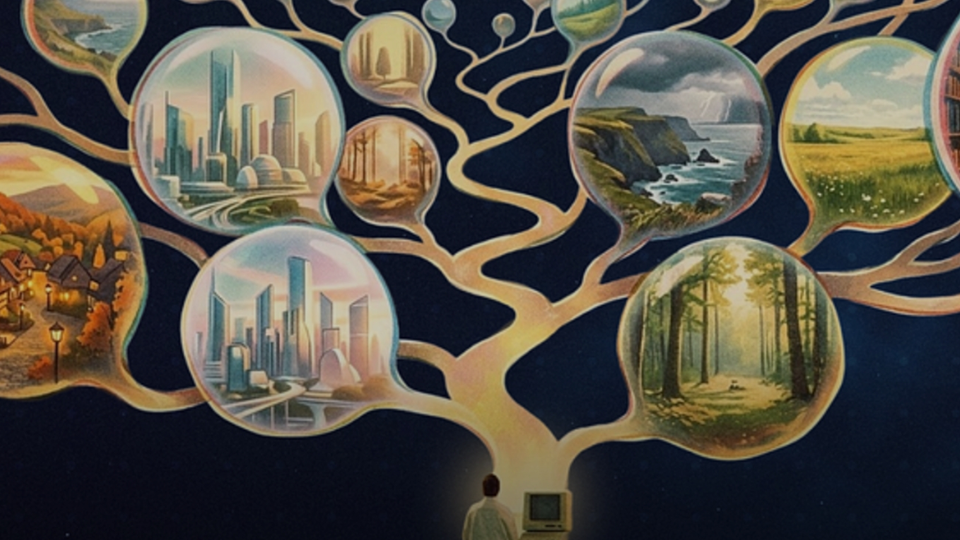
A unified canvas workflow allows creators to treat the AI as a collaborator rather than a vending machine. Instead of starting from scratch every time a revision is needed, the creator works on a persistent workspace. This approach allows for “steerable” AI, where the user can lock down certain elements of an image while iterating on others.
For content teams, this means the end of the fragmented toolset. The same environment used for upscaling a low-res concept is the same environment used for video conversion and localized editing. By keeping the metadata and the generative seed active within the workspace, the AI retains a “memory” of the asset’s structure. This makes it possible to maintain stylistic consistency across a campaign—something that is notoriously difficult when using a series of disconnected prompts.
Practical Refinement: Solving the ‘Last Mile’ Problem
The “last mile” problem is the primary reason why many AI-generated assets never make it to a final ad campaign or a high-stakes presentation. It is the subtle weirdness—the “uncanny valley” of AI hands, the nonsensical text in the background, or the strange texture on a product—that requires a human touch.
This is where the Nano Banana Pro integration becomes tactical. When you are in a live review session with a client or a creative lead, you cannot afford to say, “I’ll take this back to Photoshop and have a revision for you tomorrow.” The expectation now is instant iteration. By utilizing an integrated editor, a creator can highlight a specific area of an image and use generative fill or in-painting to fix a flaw in real-time.
For example, if a background element is too distracting, the creator can simply mask it and prompt the tool to replace it with a blurred architectural element. Because this happens within the same ecosystem as the original generation, the lighting, perspective, and noise grain of the new element are automatically matched to the existing image. This level of surgical precision is what separates a hobbyist tool from a professional production suite. It allows the team to iterate on the specific “seed” of an idea without losing the core of what worked in the initial draft.
Quantifying the Impact on Review Cycles
One of the most significant changes we see in creative operations is the compression of the revision phase. Historically, the revision phase of a project followed a predictable “ping-pong” pattern: feedback, edit, export, send, repeat. With a circular workflow, this phase is collapsing into a single collaborative session.
While it is tempting to claim that AI tools offer a 10x or 100x improvement in ROI, such claims are difficult to substantiate universally. Different industries have vastly different quality thresholds. A social media manager might find that Nano Banana enables them to produce a week’s worth of content in an afternoon, while a high-end film compositor might only see a 15% increase in speed due to the extreme precision required for their work.
It is also vital to acknowledge the “human ceiling.” Regardless of how fast an AI can generate or edit an image, the speed of delivery is ultimately dictated by human decision-making. A creative director still needs time to process the visual, compare it against the brand guidelines, and make a subjective judgment. AI can eliminate the manual labor of the edit, but it cannot (and perhaps should not) eliminate the time required for artistic contemplation. We are currently at a stage where we can quantify the time saved on “clicking,” but the time spent “thinking” remains a constant in the production equation.
Re-Engineering Your Pipeline for Circular Iteration
For organizations looking to integrate Banana Pro into their existing workflows, the shift is as much cultural as it is technical. It requires moving away from the mindset of “finding the perfect prompt” and toward a mindset of “building a base and refining.”
- Shift to Layered Thinking: Creators should be trained to view an AI generation as a foundation. Rather than spending three hours trying to get a single prompt to include five specific objects, it is often more efficient to generate the environment first and then use the editor to add or modify elements. This “compositing” mindset is familiar to traditional designers but is often overlooked by new AI users.
- Live Iteration Protocols: Encourage teams to conduct review sessions within the tool. Instead of taking notes on a PDF or a Slack thread, make the adjustments during the meeting. This transparency demystifies the AI process for stakeholders and ensures that the final “export” is the one that has already been approved.
- Realistic Benchmarking: Set expectations that reflect the current limitations of the technology. While Banana AI and its associated models are incredibly powerful, they are not magic. There will be times when the AI cannot interpret a specific localized edit, and a traditional manual fix will be necessary. Knowing when to stop prompting and start manual retouching is a key skill for a modern creative operator.
The goal of implementing tools like Nano Banana is not to replace the creative process but to remove the friction that stifles it. By closing the loop between generation and editing, teams can spend less time managing files and more time exploring the visual possibilities of their ideas. The future of production velocity isn’t about the speed of the engine; it’s about how quickly you can steer it to the finish line.