In the world of web development and digital communication, even a small mistake can create unexpected problems. One of those hidden issues often comes from something as simple as a URL encoder spellmistake—a tiny error in encoding web addresses that can break links, APIs, or entire user flows. It may sound technical, but in reality, it’s something developers, marketers, and even everyday users encounter more often than they realize.
URL encoding is meant to convert special characters into a format that browsers and servers can safely understand. But when mistakes creep in—whether through incorrect syntax, missing characters, or simple typing errors—the result can be broken links, failed requests, or confusing outputs. Understanding these issues is essential for anyone working with websites, apps, or online tools.
What URL Encoding Really Means and Where Mistakes Begin
URL encoding is the process of converting characters like spaces, symbols, or non-ASCII text into a percent-based format. For example, a space becomes %20. This ensures that web addresses remain valid and readable by systems across the internet.
A URL encoder spellmistake typically occurs when this conversion is done incorrectly. It might be a typo in code, misuse of encoding functions, or misunderstanding of how encoding should work. Sometimes developers manually encode URLs instead of using built-in tools, which increases the risk of errors.
I once worked on a small project where a single missing %20 in a query string caused an entire search feature to stop working properly. It took hours to trace the issue, even though the fix was just a tiny encoding correction.
These kinds of mistakes often hide in plain sight but have a big impact.
Common URL Encoding Mistakes You Should Watch Out For
Many encoding issues stem from predictable patterns. Once you know them, they become much easier to avoid:
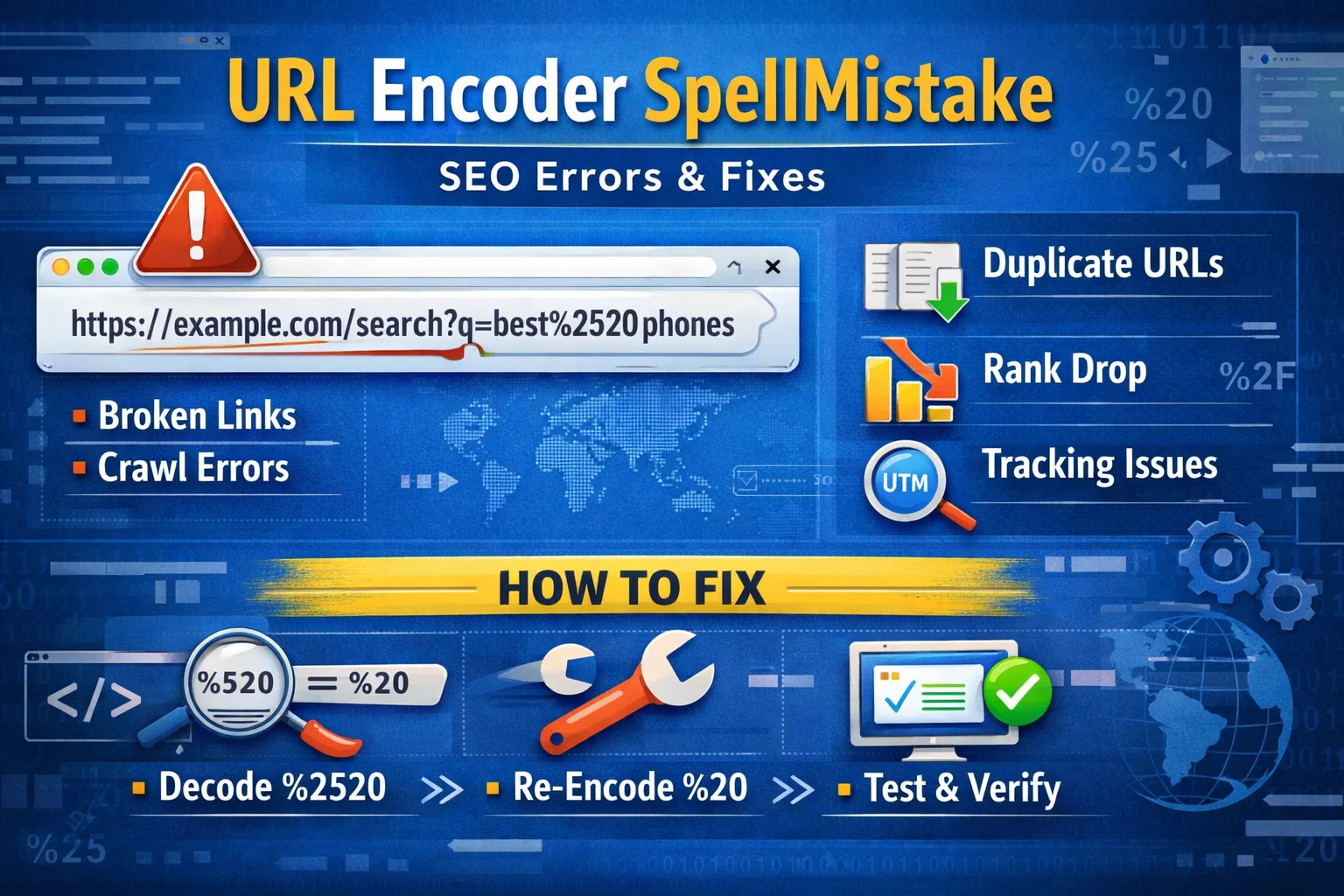
- Double encoding: Encoding an already encoded URL (e.g.,
%2520instead of%20) - Missing encoding: Leaving spaces or special characters unconverted
- Wrong character replacement: Using incorrect symbols or formats
- Manual typing errors: Spelling mistakes in encoding functions or syntax
- Improper decoding: Converting encoded URLs incorrectly on the server side
These mistakes often appear harmless at first but can lead to broken navigation paths or failed API calls.
Comparison of Correct vs Incorrect URL Encoding
Here’s a simple comparison that shows how small mistakes can completely change how a URL behaves:
| Situation | Correct Encoding | Common Mistake | Result |
|---|---|---|---|
| Space in URL | my%20file.pdf |
my file.pdf |
Broken link or error |
| Special character (@) | %40example.com |
@example.com without encoding |
Misinterpreted email/URL |
| Already encoded data | %20 |
%2520 (double encoded) |
Invalid or unreadable output |
| Query parameter | name=Ali%20Khan |
name=Ali Khan |
Truncated or failed request |
This table shows how even a small deviation in encoding logic can completely disrupt how systems interpret data.
How a Small Encoding Mistake Affects Real Systems
Imagine a small e-commerce website where users search for products using a filter system. The developer introduces a new feature allowing users to search for “men’s running shoes.”
However, due to a URL encoder spellmistake, the apostrophe in “men’s” is not encoded properly. Instead of converting it to %27, it remains as a raw character. The result? The server rejects the request, and users start seeing empty search results.
From the user’s perspective, the website looks broken. From the business side, sales drop because people assume the product doesn’t exist. All of this because of one small encoding oversight.
This is a perfect example of how invisible technical errors can directly affect user experience and revenue.
How to Identify and Fix Encoding Problems
The good news is that URL encoding issues are usually easy to fix once detected. The key is knowing where to look and how to handle them properly.
Here are some practical ways to avoid and correct mistakes:
- Always use built-in encoding functions instead of manual encoding
- Validate URLs before sending them to servers or APIs
- Use debugging tools to inspect raw request data
- Avoid double encoding by checking existing encoded values
- Test URLs with different characters before deployment
Modern programming environments already provide reliable encoding utilities, so relying on them reduces human error significantly.
Another helpful approach is logging raw and encoded URLs separately. This makes it easier to compare and identify mismatches quickly.
Why Small Encoding Errors Create Big Problems
At first glance, URL encoding seems like a minor technical detail. But in reality, it plays a critical role in how data moves across the web.
A single spelling mistake in encoding logic can lead to:
- Broken navigation links
- Failed API communication
- Lost user data in forms
- Poor SEO performance due to invalid URLs
The web is built on precision. Even a small mismatch in encoding can create a ripple effect across systems, especially in large-scale applications.
Read More:
Conclusion
A URL encoder spellmistake might sound like a minor technical slip, but its impact can be surprisingly large. From broken links to failed APIs and lost user trust, encoding errors remind us how important precision is in digital systems.
The key takeaway is simple: never underestimate small details in URL handling. By using proper encoding methods, testing thoroughly, and avoiding manual errors, you can ensure smooth communication between browsers, servers, and users.
In the end, clean encoding isn’t just about technical correctness—it’s about delivering a seamless and reliable web experience.
FAQs
1. What is a URL encoder spellmistake?
It refers to errors made during URL encoding, such as incorrect characters, missing conversions, or improper formatting that break links or data transmission.
2. Why is URL encoding important?
It ensures that special characters in web addresses are safely transmitted across browsers and servers without causing errors.
3. What happens if URL encoding is wrong?
Incorrect encoding can lead to broken links, failed API requests, or incorrect data interpretation by servers.
4. How can I avoid URL encoding mistakes?
Use built-in encoding functions, avoid manual changes, and always test URLs before deployment.
5. Can encoding errors affect SEO?
Yes, incorrect URLs can lead to crawling issues, broken links, and poor indexing, which may negatively impact search rankings.